
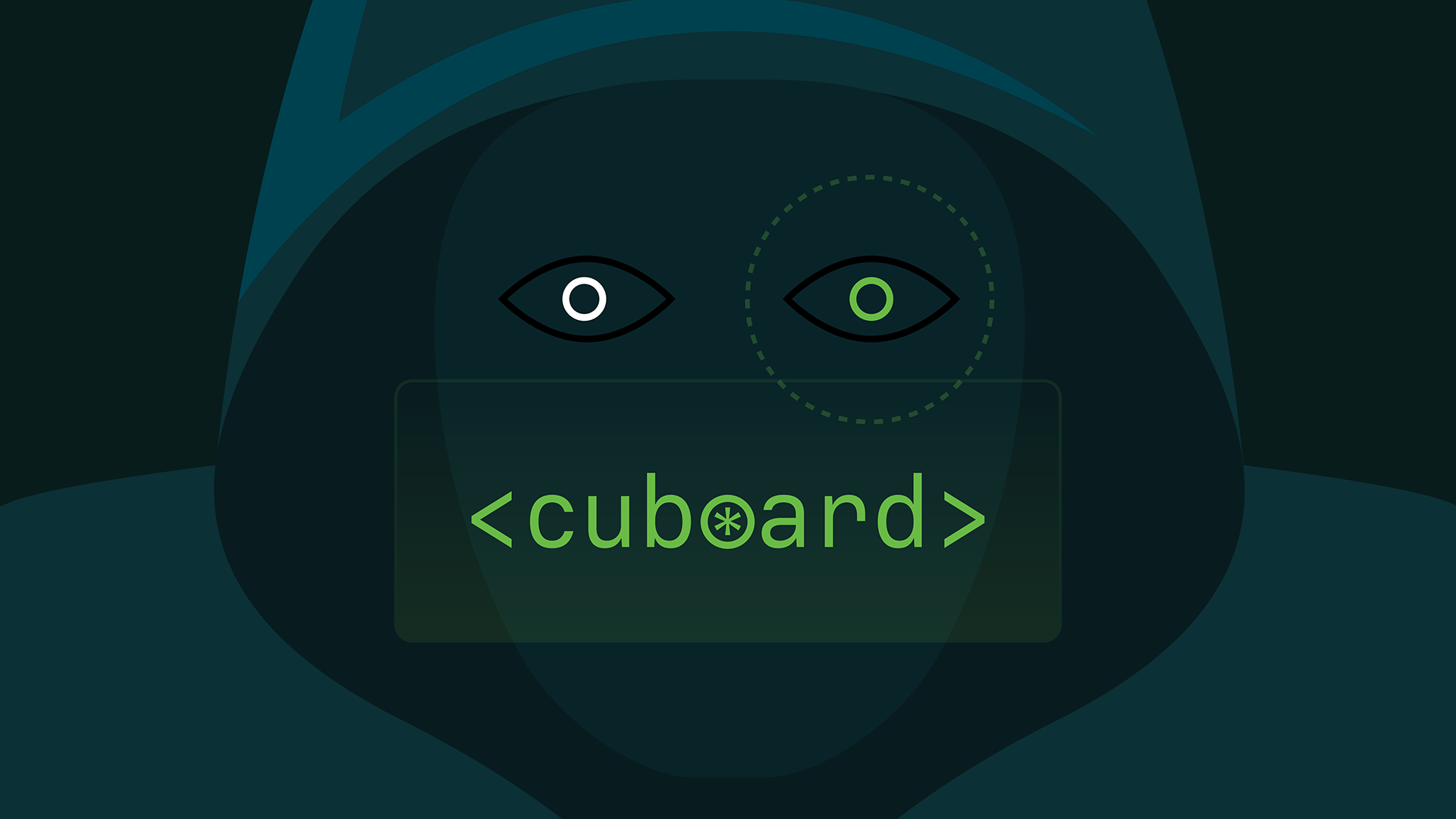
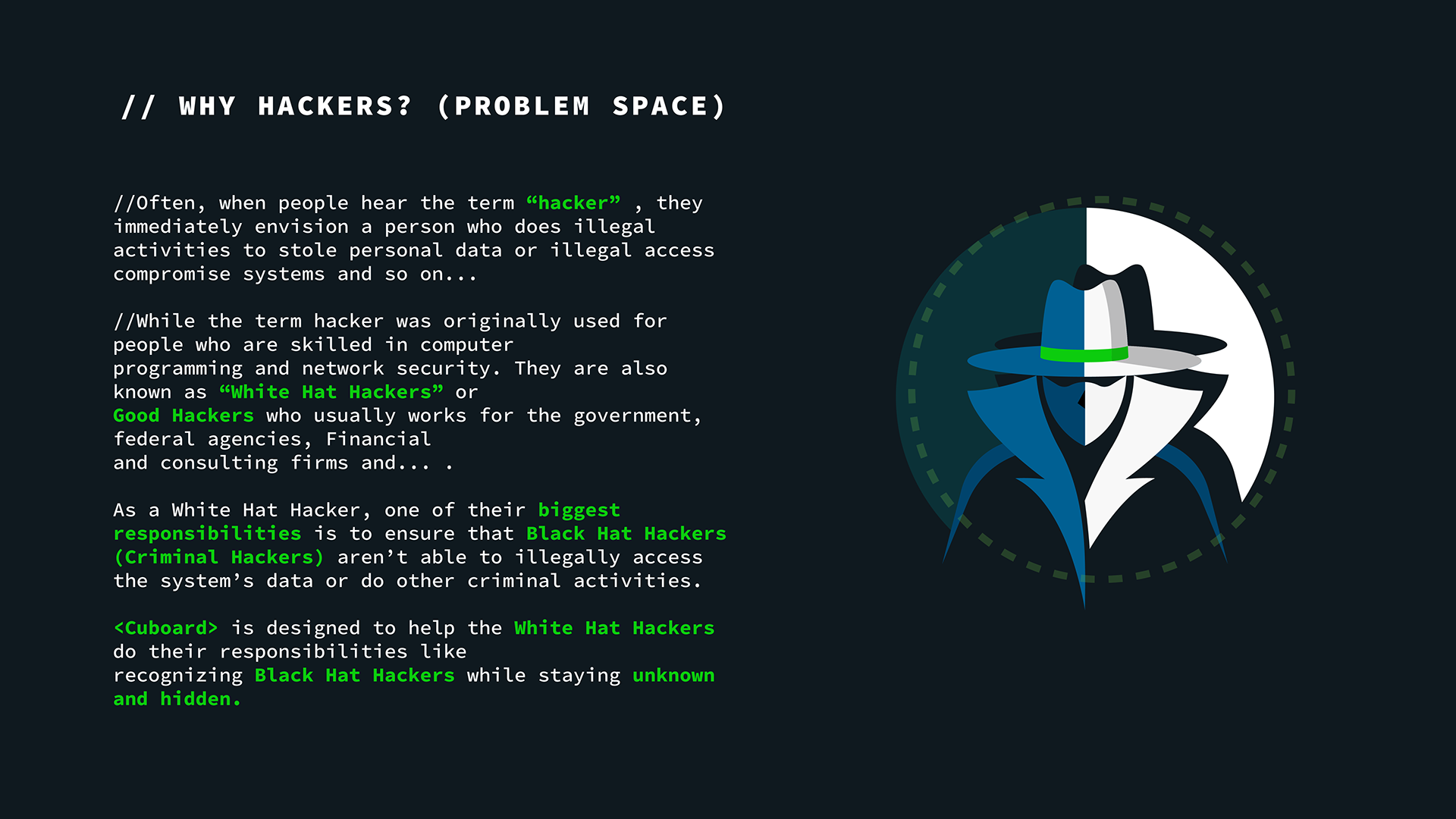
Cuboard started with a different way of looking at hackers. While the word often brings criminal activity to mind, white hat hackers work to find security weaknesses and protect systems from real threats.
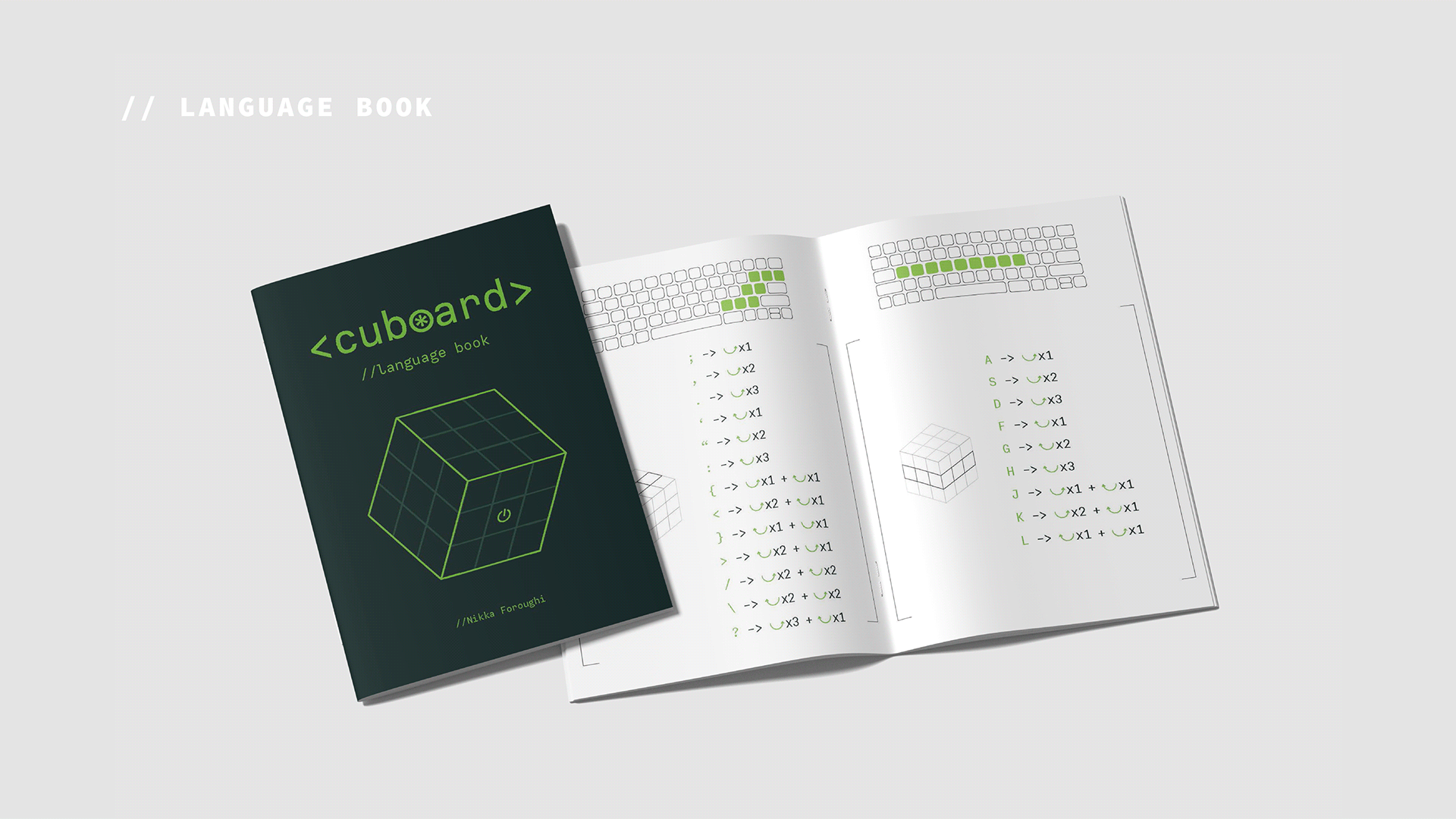
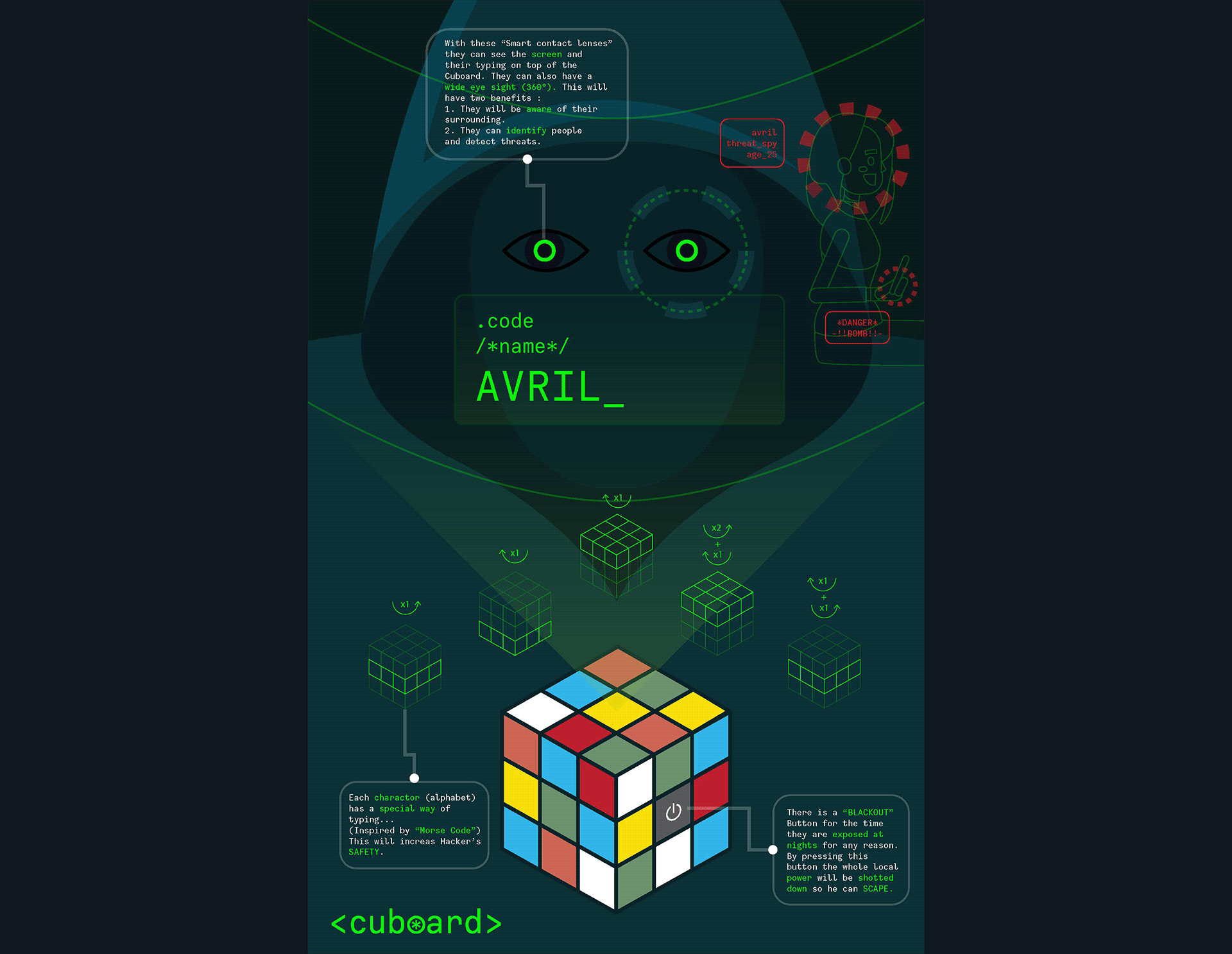
I designed Cuboard as a discreet tool that allows them to work without exposing an ordinary keyboard or screen. Each movement of the Rubik’s Cube represents a letter or command, creating a physical coding language that users can learn through a supporting guidebook.
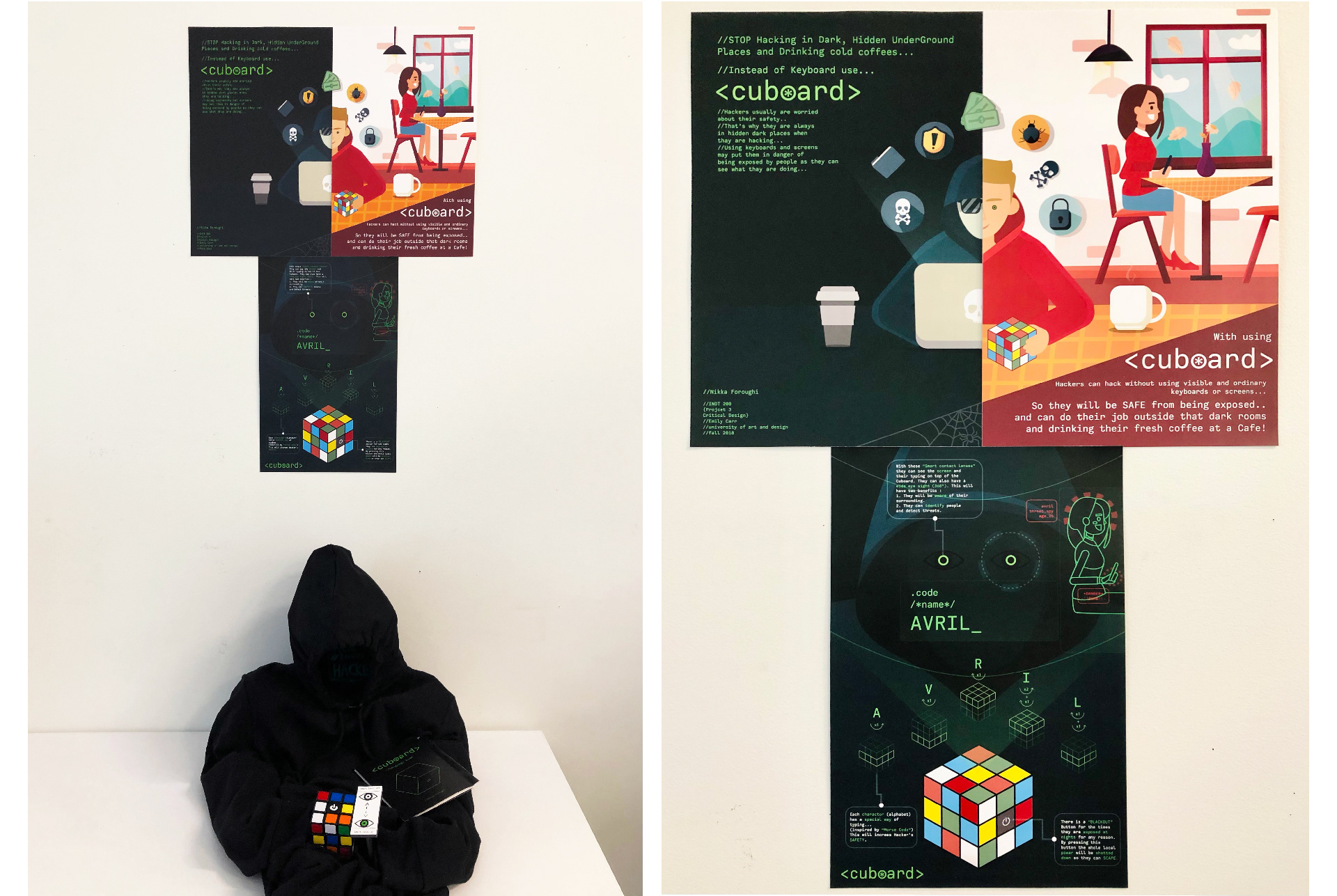
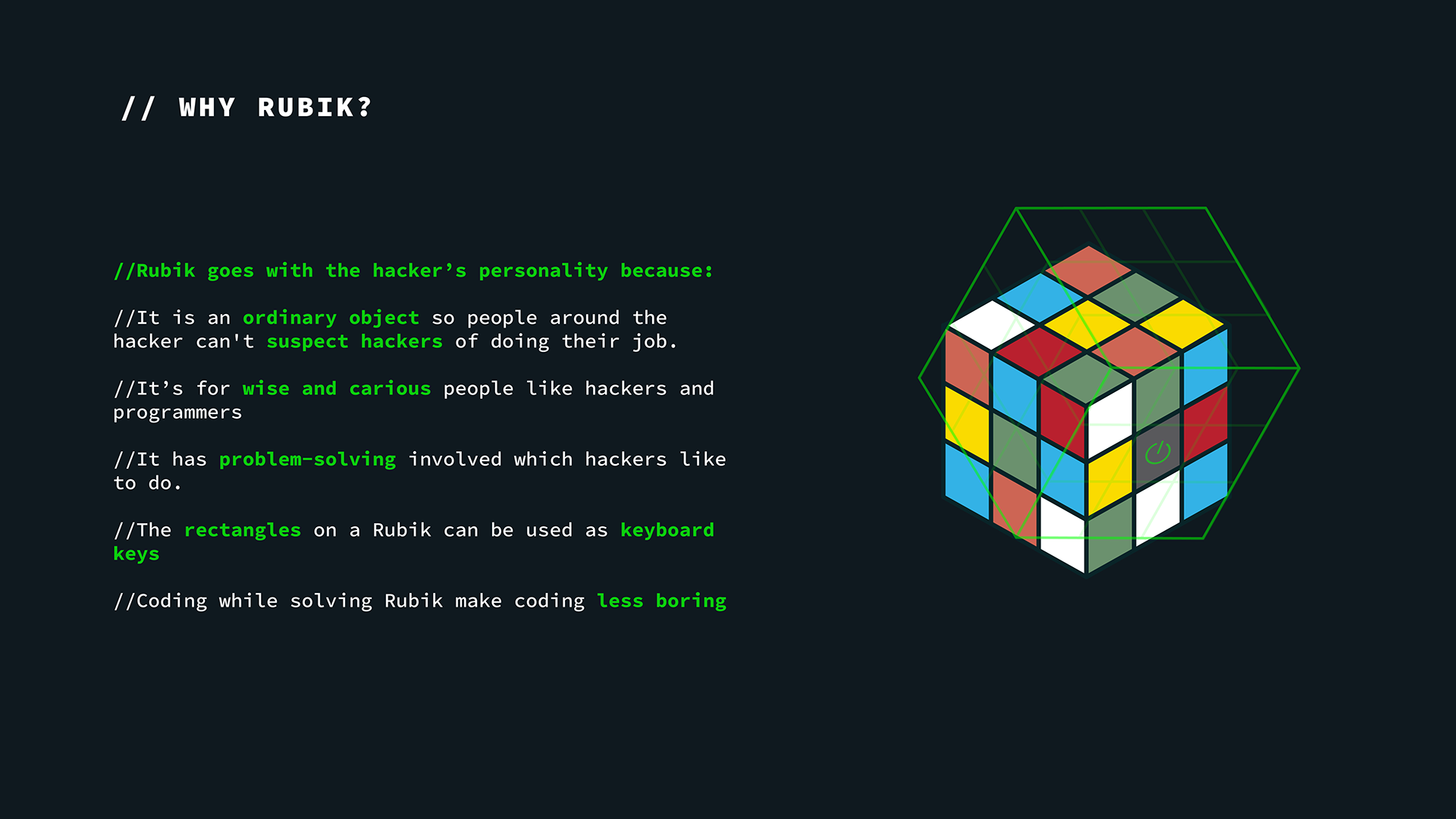
The cube connects with smart contact lenses that display the code and surrounding information directly in the user’s vision. This lets hackers work more freely while staying aware of nearby people and possible threats. I chose a Rubik’s Cube because it looks like an ordinary object, connects naturally with problem solving and makes the interaction feel more playful.
The project brought together speculative technology, interaction design, visual storytelling and editorial design to imagine a less visible and more portable way of working. Cuboard is presented on Behance as a design for white hat hackers and was created using Adobe Illustrator and Photoshop.
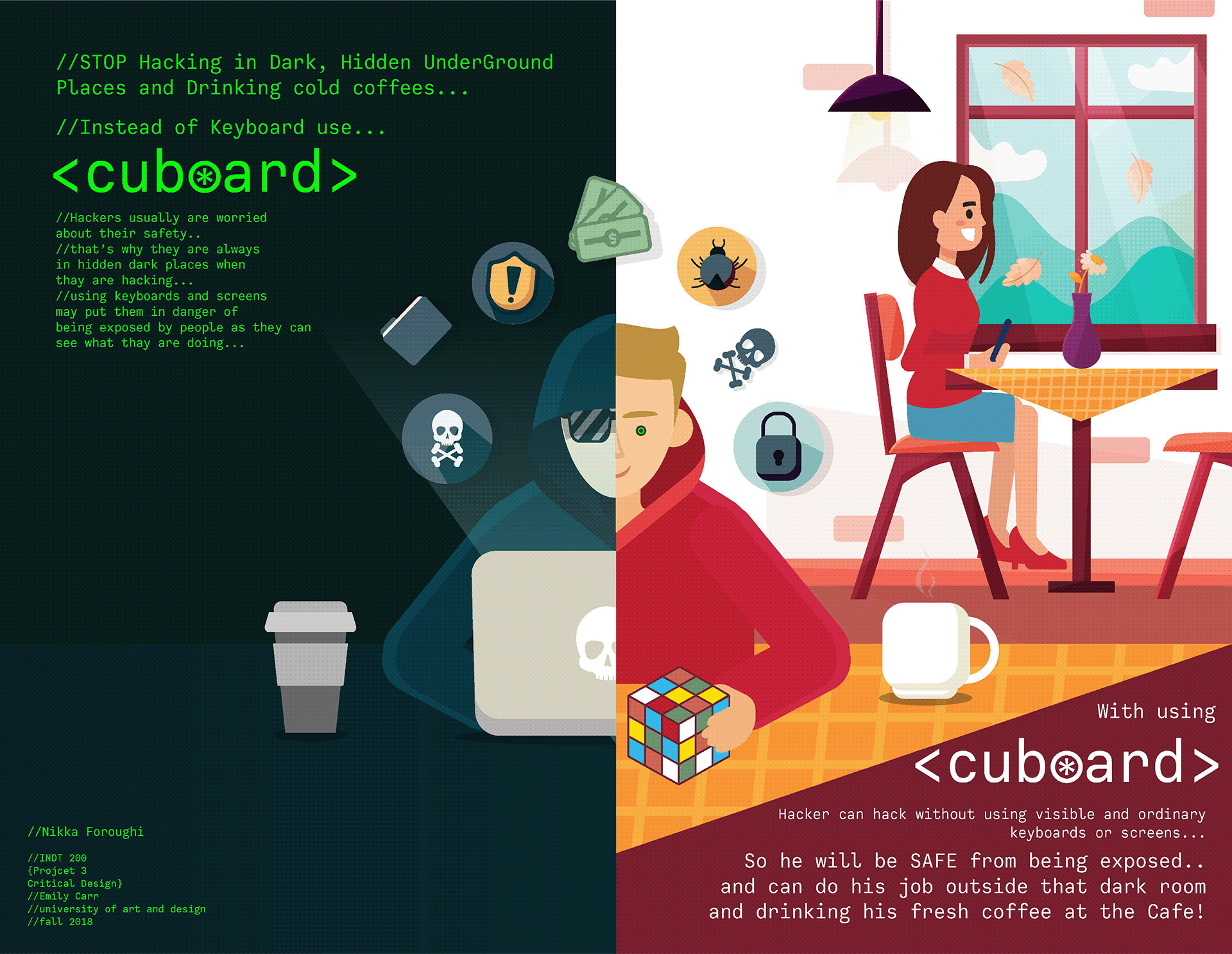
I imagined a way for ethical hackers to code in public without opening a laptop or exposing their work to the people around them.
It already feels connected to patterns and problem-solving. More importantly, the interaction can hide inside an object most people would ignore.
Each face and movement maps to a character or command. As the cube turns, the code appears through connected smart lenses
The guidebook teaches the movement-based language, turning the cube into a learnable input system instead of a one-time trick.