

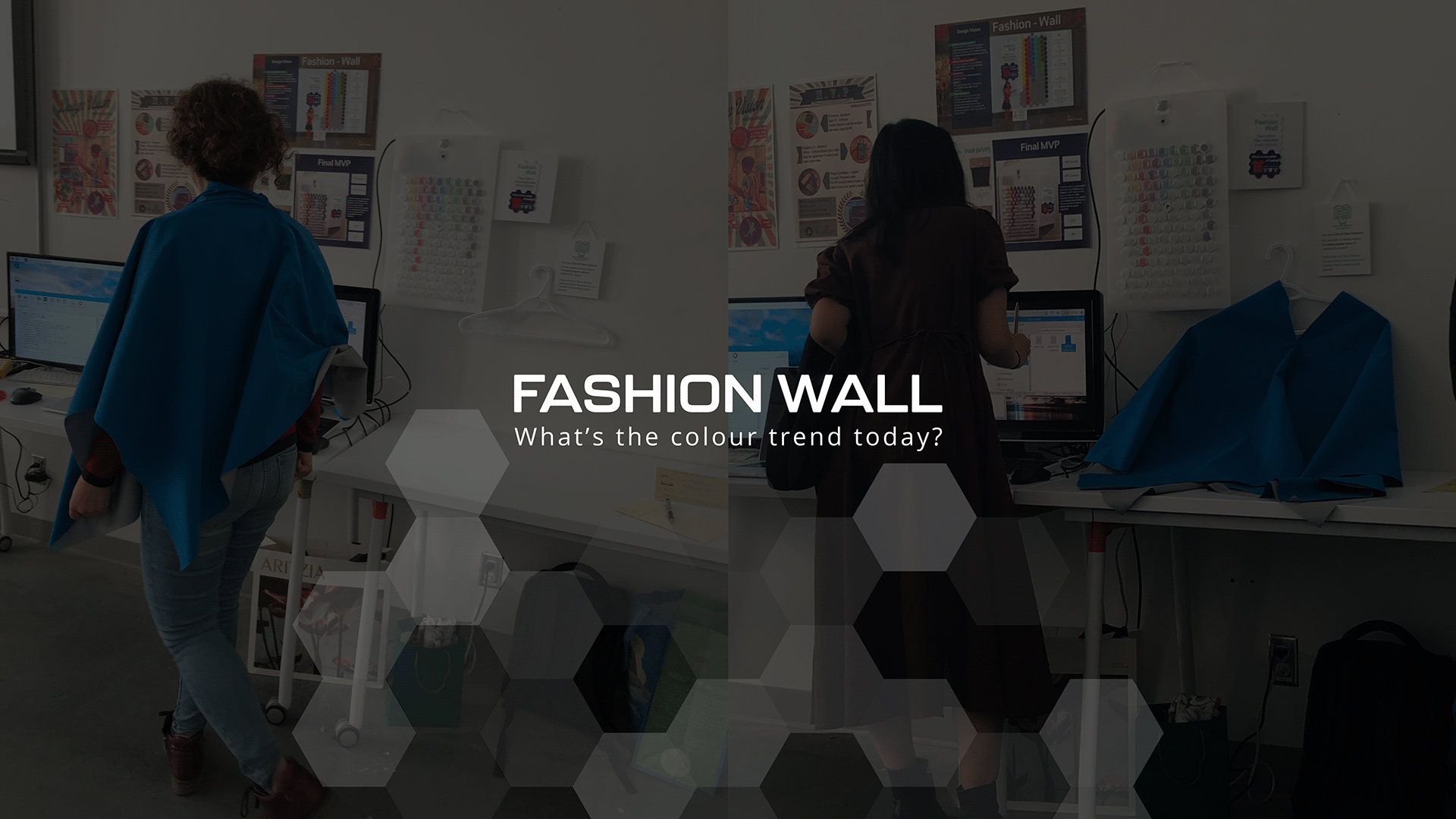
I designed an interactive wall that detects the main colour of a passerby’s clothing. A matching hexagonal light then turns on and plays a short melody. As more people pass, the wall gradually creates a live colour palette showing the most popular colours worn that day.
I wanted the interaction to feel almost invisible—no buttons, screens or instructions. Just walk by and become part of the wall.
I developed the project from the first sketches and storyboard to the journey map, 3D model and working prototype. Using a Raspberry Pi, camera, motion sensor, OpenCV and LED lights, I connected colour recognition technology to a physical experience people could see, hear and interact with.
The project brought together my interests in fashion, colour, interaction design and technology, turning everyday clothing choices into a playful public display.

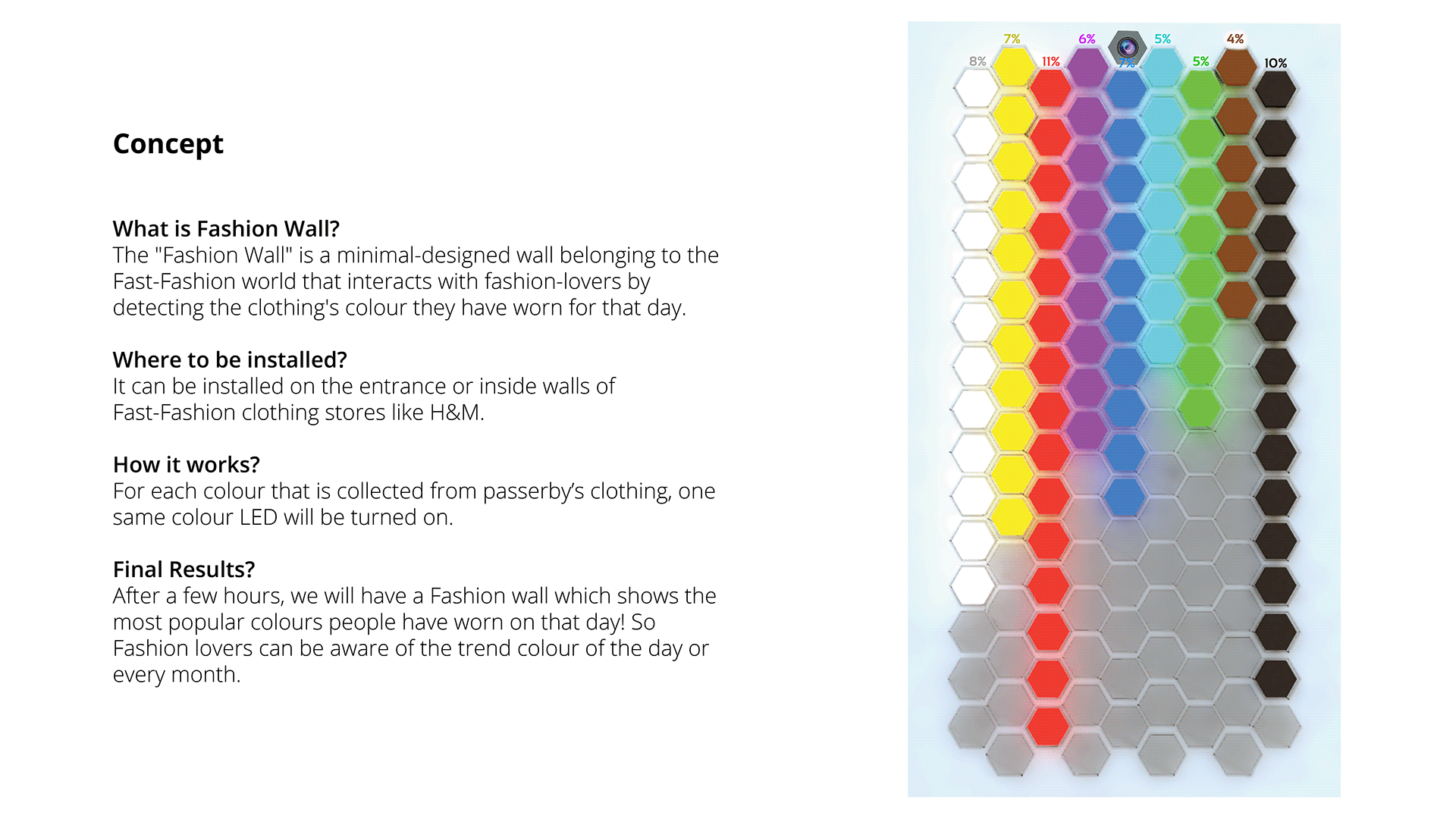
A motion sensor notices someone approaching.
The camera finds the dominant colour in their clothing.
The matching hexagon lights up and plays a melody.
Each colour stays on the wall, building the day’s palette.

I mapped the experience from walking past the wall to noticing your colour appear. The response needed to feel immediate, clear and a little unexpected.


I connected a Raspberry Pi, camera, motion sensor and LEDs, then used Python and OpenCV to recognize clothing colours and trigger the matching light.

I first modelled the hexagonal wall in 3D, then explored how it could live inside fashion stores and other busy public spaces.


The final installation brought the full loop together: detect, match, light and collect.